Overview:
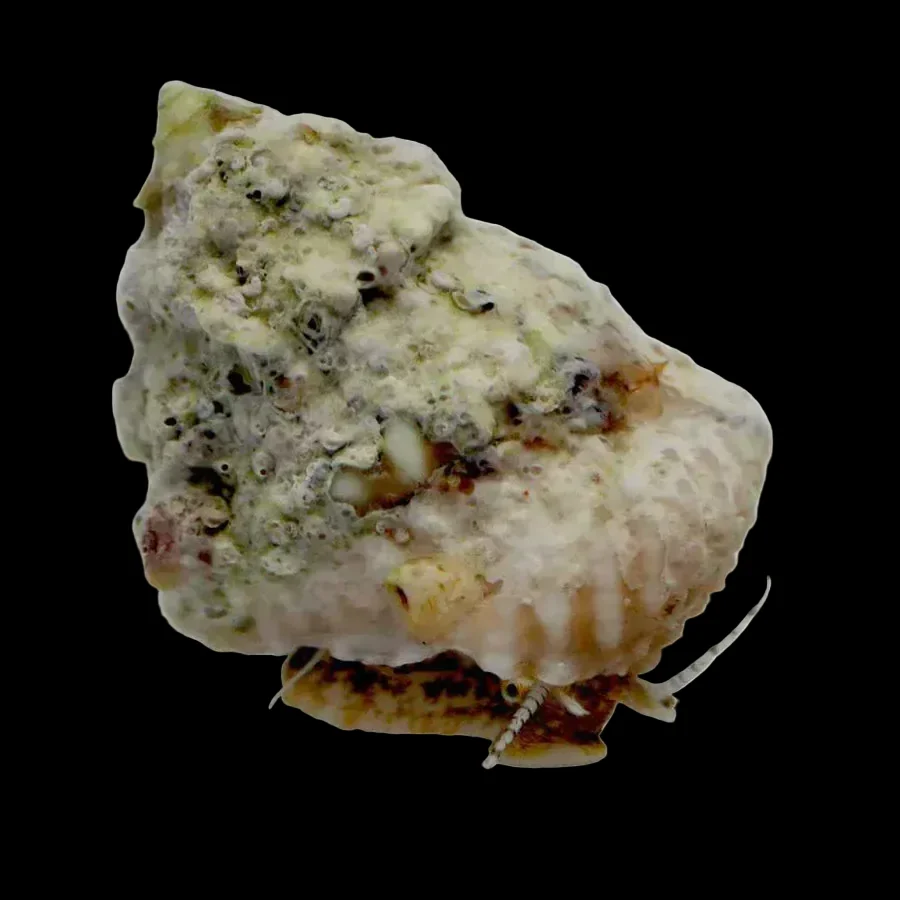
Astrea snails (Astrea spp.) are marine herbivorous grazers valued for controlling film algae and some microalgae on rock and glass. They do best in stable reef conditions with plenty of hard surfaces to graze and moderate water movement. Aim for 24–26°C (75–79°F), salinity 1.024–1.026, pH 8.1–8.4, alkalinity 8–11 dKH, calcium ~380–450 ppm, and magnesium ~1250–1350 ppm to support shell health. Keep nitrate and phosphate low to moderate; “too clean” systems may not produce enough natural algae for long-term feeding. Astrea snails are not strong righting themselves if they fall onto their backs, so provide stable rockwork and check the tank daily, especially after maintenance.
Compatibility:
Astrea snails are generally reef-safe with corals and most peaceful fish. They can be kept singly or in groups; stocking depends on algae availability rather than tank size alone. They are vulnerable to predators and harassment: many wrasses, puffers, triggers, large crabs, and some hermit crabs may flip, pick at, or kill them for food or shells. If keeping hermits, provide plentiful empty shells and watch for bullying. Avoid housing with predatory snails (e.g., whelks) and large, aggressive cleaner crews that may outcompete them for food in sparse-algae systems.
Health and Quarantine:
Most issues stem from rapid parameter changes, starvation, or predation. Acclimate slowly (drip acclimation is preferred) to prevent osmotic shock, and match temperature carefully. A healthy Astrea is firmly attached, responsive when touched, and shows steady grazing. Shell pitting or erosion suggests low alkalinity/calcium or chronically low pH. Quarantine is mainly to prevent hitchhikers and to observe behavior; use a small, cycled tank with some algae-covered rock or a pre-grazed tile. Avoid any medication containing copper. During observation, flip and right the snail if it cannot correct itself; prolonged time upside down can be fatal.